


💧 Clean water is the foundation of healthy hair and skin
How does chlorinated water affect hair and skin?
Most households in Slovakia use water from the public water supply, which is disinfected with chlorine. This is a necessary step to kill bacteria, but at the same time, chlorine is a substance with a strong oxidizing effect – meaning it can adversely affect the skin barrier, hair fiber, and skin microbiome. While drinking this water is safe, with daily contact with shower water, chlorine enters the body through the skin.
How do I know if chlorinated water is bothering me?
- tightness, dryness, burning or itching after showering,
- skin peeling, flaking, or redness,
- hair is dry, dull, brittle, color fades,
- dandruff, oiliness and itching of the scalp,
- worsening of eczema, acne or other skin inflammations.
In fact, this is a chemical and biological disruption of the skin's balance due to chlorine.
What happens when we shower in chlorinated water?
When chlorine comes into contact with water, hypochlorous acid (HOCl) is formed – a strong oxidizing agent that kills microorganisms, but also:
- damages the skin's lipid barrier,
- dissolves natural skin oils,
- increases skin permeability to foreign substances,
- changes pH and disrupts the natural protective microbiome.
It acts similarly on hair – chlorine oxidizes keratin, weakening the hair structure, causing loss of elasticity, brittleness, and reduced resistance to UV radiation or mechanical damage.
How does chlorine harm skin problems?
Skin with a damaged barrier reacts much more sensitively to chlorine. Scientific research confirms that chlorinated water worsens the course of eczema, acne, and psoriasis.
🔹 Atopic eczema and dry skin
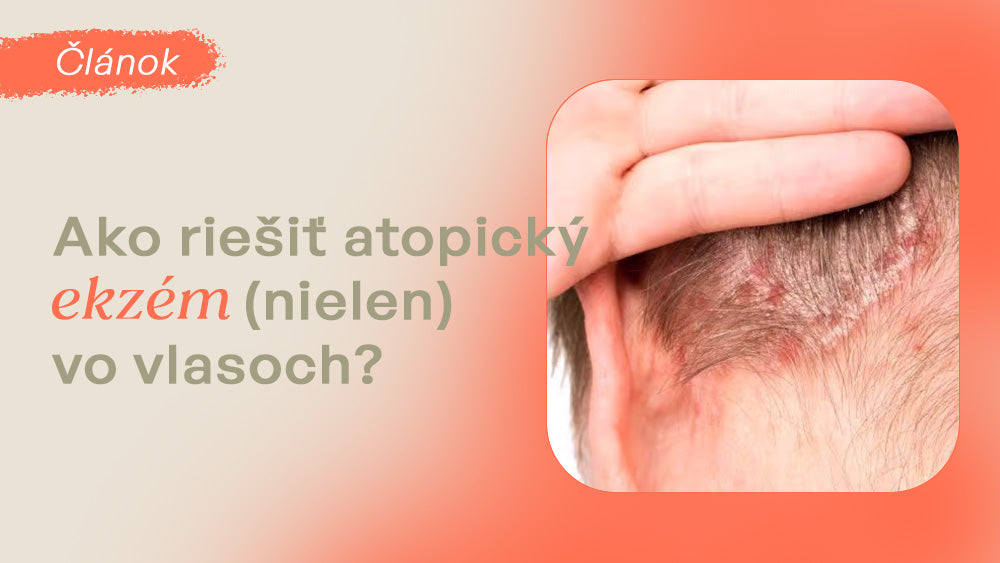
Chlorine increases dehydration – the skin loses moisture, becomes tight, dry, and cracks. In atopic individuals, contact with chlorine leads to worsening itching, burning, and irritation.
🔹 Seborrheic dermatitis and dandruff
Chlorine disrupts the balance of the scalp microbiome, which promotes the overgrowth of Malassezia yeasts. Hair becomes greasy faster as the skin tries to replace the missing sebum.
🔹 Acne and clogged pores
Even oily skin suffers – chlorine increases oxidative stress and inflammation, promoting the formation of blackheads and pimples. It reduces the skin's ability to regenerate and increases susceptibility to infections.
🔹 Psoriasis and sensitive skin
In psoriasis, chlorine activates inflammatory cytokines, which worsens peeling and redness. Even brief contact with chlorine can cause stinging or burning.
Chlorine, microbiome and skin immunity
Our skin is home to millions of beneficial bacteria. Chlorine destroys this ecosystem – it reduces the number of "good" bacteria and increases sensitivity to irritants.
- loss of pH balance,
- chronic inflammation,
- weakening of the skin's natural defenses.
Therefore, for people with dermatitis, acne, or rosacea, it is recommended to minimize contact with chlorinated water.
How does chlorinated water affect the body as a whole?
During a hot shower, chlorine evaporates – gaseous forms (chloroform, trihalomethanes) are formed, which enter the bloodstream through inhalation and through the skin. Long-term contact can:
- increase oxidative stress and free radicals,
- worsen asthma and breathing difficulties,
- cause hormonal imbalances.
🌿 How to protect yourself from the effects of chlorine?
The most effective solution is to filter water directly when showering. The Andreine filter shower head removes chlorine, heavy metals, and impurities from pipes.
Andreine filter shower head
- neutralizes chlorine,
- protects the skin's microbiome,
- reduces inflammation and irritation,
- restores pH and hydration,
- promotes healthy hair growth.
Results of regular use:
- skin is hydrated and free of irritation,
- alleviation of eczema and dandruff,
- hair is shiny and elastic,
- less chemical load on the body.
How does the head work?
It simply connects to the shower hose. The carbon filter captures chlorine, heavy metals, and microparticles of rust. The transparent design allows you to monitor the filter's condition, which should be changed every 2–3 months.
Why is clean water crucial?
Water makes up more than 60% of our body. If we come into daily contact with chemicals, our skin and hair are exposed to oxidative stress. Clean water:
- improves microcirculation,
- supports cell regeneration,
- increases the effectiveness of cosmetic and trichological care.
💧 Give your skin and hair purity and balance.
Andreine Filter Shower Head – a scientifically backed solution for healthier hair, softer skin, and cleaner water.
🔬 Sources and scientific studies:
Exley, C. (2019). “Chlorine and skin barrier function.” Journal of Dermatological Science.
Koziel, J. A. et al. (2021). “Chlorinated water exposure and the skin microbiome.” Frontiers in Microbiology.
Sato, K., & Fukui, Y. (2017). “Effect of chlorine on keratin structure.” International Journal of Cosmetic Science.
EPA (USA). “Health Effects of Disinfection Byproducts.”
WHO (2017). Guidelines for Drinking-water Quality.
Kim, M. et al. (2020). “Chlorine exposure exacerbates atopic dermatitis.” Allergy.
Lee, S. H., & Jeong, S. K. (2018). “Disruption of skin microbiome by chlorinated water.” Clinical and Experimental Dermatology.